Research & Discovery
Nostalgia: It’s good for you!
Psychology professor Jeff Green, Ph.D., explains the history and science of a feeling that new research says is part of our psychological immune system — and why it leads us to keep mementos.
Jeff Green, Ph.D., is, admittedly, a nostalgic man. The VCU psychology professor, a self-described “highly selective packrat,” saves his movie, concert and Fenway Park ticket stubs, or did when ticket stubs were still made of paper.
He’ll keep matchbooks, water bottles and, given the chance, probably even one of those Times Square handbills for the comedy show you swore you’d go to. And despite not being my mom, he still makes actual, physical photo albums.
There’s a reason for this — and it’s not that Green is just a big, giant, sentimental sap, though he certainly is (me too, Jeff). The reason is science. We are predisposed to nostalgia, it turns out. Green, a social psychologist and maybe Kodak’s last hope, studies nostalgia, its mental health benefits and its sturdy place in what’s known as our psychological immune system.
“Research has amply demonstrated that [nostalgia] is a healthy thing,” says Green, the director of VCU’s social psychology concentration in the College of Humanities and Sciences. The Encyclopedia Britannica cites his research in its entry on nostalgia. “That it leads to feelings of social connectedness. It can enhance optimism, inspiration, even creativity. It could lead to a higher sense of self-continuity, like there’s more of a coherent narrative to our fractured lives.
“Moreover, nostalgia seems to come from myriad places. We’ve got a publication on how scents can trigger nostalgia, which in turn leads to these feelings of well-being, meaning in life. We also did one on taste, and we’re currently doing one on touch. Other [studies], of course, have done music, photographs, direct-memory recall, and we’ve done one on reunions that sort of touched on that. Most people feel nostalgia at least a few times a week, and lots of different things can trigger it.”
Objects, for example, can serve as sort of nostalgia totems, as the keepsakes and their stories below show. Mementos inspire feelings of what’s called anticipated nostalgia.
Green says: “I think keepsakes or mementos … are probably quite important. We’ve done a little bit of research on nostalgia and toys” — scholarly paper coming soon — “and people do talk about their favorite toys and, informally, maybe talk about hanging on to some of them, so everybody does have those things they save. What I like about it is — and maybe this ties to that anticipated nostalgia that we’ve studied — a lot of times, you’re in the moment, and I am going to somebody’s wedding or graduation, and I want to remember this later.”
“Nostalgia is a pretty unique state in that it also involves your personal, autobiographical memories. You can be nostalgic for an event that your close friend feels completely differently about. They had a different experience. They brought a different psychology to that experience.”
Johannes Hofer would shudder at the thought. Hofer was a Swiss physician who, in 1688, diagnosed the symptoms of a potentially fatal mental illness he called “nostalgia.” This is the origin of our modern study of nostalgia.
In “Medical Dissertation on Nostalgia or Homesickness,” Hofer, nodding to Odysseus’ epic homesickness, combined the Greek words for “return” (nostos) and “pain” (algos), cited a story some guy told him, ascribed a number of intuitively plausible symptoms and gave name to a feeling that had been observed since ancient times, notably by Hippocrates and Caesar. The Bible also makes note of it.
“[Hofer] made the classic scientific error,” Green says. “Mistaking a correlation — an association — and surmising a causal link.”
Hofer did not excel at the scientific method. Around the time Isaac Newton figured out the math to launch stuff into orbit, Hofer observed Swiss mercenaries he saw as direly homesick. “A melancholy delirium,” he called it. Hofer thought it was a mental illness and probably caused by demons.
Today, Hofer couldn’t diagnose nostalgia if it took him by the hand and whispered in his ear. His proposed symptoms included burning fever, sad wandering, “scorn” of “foreign manners,” sleeplessness, enervation, hunger, thirst, heart palpitations, not being able to take a joke, “frequent sighs,” stupidity and making “a show of the delights of the Fatherland.”
As treatment, Hofer recommended bloodletting, mercury and public prayer. But the best remedy, he said, was just taking someone back home. Hofer — who, again, was observing mercenaries — considered those most at risk of nostalgia to be “young people and adolescents sent to foreign nations.” Others at the time studied this, too.
“They realized these people are homesick and they’re not in very good shape,” Green says. “There was a correlation between loneliness or depression and this homesickness or nostalgia. It turns out that it’s not that nostalgia causes these negative things; it’s actually when we’re in these negative states, we’re more likely to feel nostalgic. That’s going to spark nostalgia, which, in turn, helps ameliorate those states. In other words, nostalgia has this repair function or restorative function.”
Psychology, somehow, mostly agreed with Hofer for several hundred years. Into the 19th century, it was even believed that nostalgia bedeviled the Swiss and no one else.
“We have this thing called the hindsight bias,” Green says after I got haughty. “Which is, after we tell you something, you’re like, ‘Oh, yeah, well, obviously.’ [For example], when you’re talking about attraction, I’ll start out my lecture and I say, ‘When I tell you opposites attract …’ and then everybody’ll nod like, ‘Well, yeah, opposites attract. We talk about that all the time. We have that saying.’ And that’s actually a load of crap. Opposites do not attract. So it’s 98% the other saying we have, which is ‘Birds of a feather flock together.’”
Nostalgia’s rehabilitation came about during the “positive psychology” movement. In the late 1990s, after a century of focusing mostly on disorders and negative feelings, researchers looked deeper at the mental processes that kick in when we’re having trouble emotionally keeping it together. Nostalgia seems to be one of those processes.
Constantine Sedikides, Ph.D., was Green’s doctoral adviser at the University of North Carolina and among the first to publish specifically about nostalgia, though there are journal references to it sprinkled through the decades. Sedikides co-authored the first of his many, many academic papers on the subject in 2004: “Nostalgia: Past, Present, and Future.”
At the end of the paper, the authors describe nostalgia as formerly a “psychological ailment” that’s now “emerging as a fundamental human strength” — a part of our psychological immune system. It’s the name for the feelings and mental processes, like nostalgia or hope, that help regulate our emotional well-being.
“It’s a bittersweet emotion, so it’s a more complex emotion,” Green says of nostalgia. “You could simultaneously think back about all those fun memories in college and you can still, at the same time, lament that you don’t see those folks as much, or that you lost touch with one or two of your closer friends there.
“Nostalgia is a pretty unique state in that it also involves your personal, autobiographical memories. You can be nostalgic for an event that your close friend feels completely differently about. They had a different experience. They brought a different psychology to that experience.”
Green, who lobbies friends and loved ones to go to their class reunions (research says it’s beneficial), offered this keepsake from his alma mater, Dartmouth: the remains of a clay pipe. Observing tradition, he smashed it when he graduated.
“I actually saved these shards of that pipe. Even back then, I was maybe predisposed to and ready to be a future researcher,” he says. “I was the only one who did that.”
The things we kept
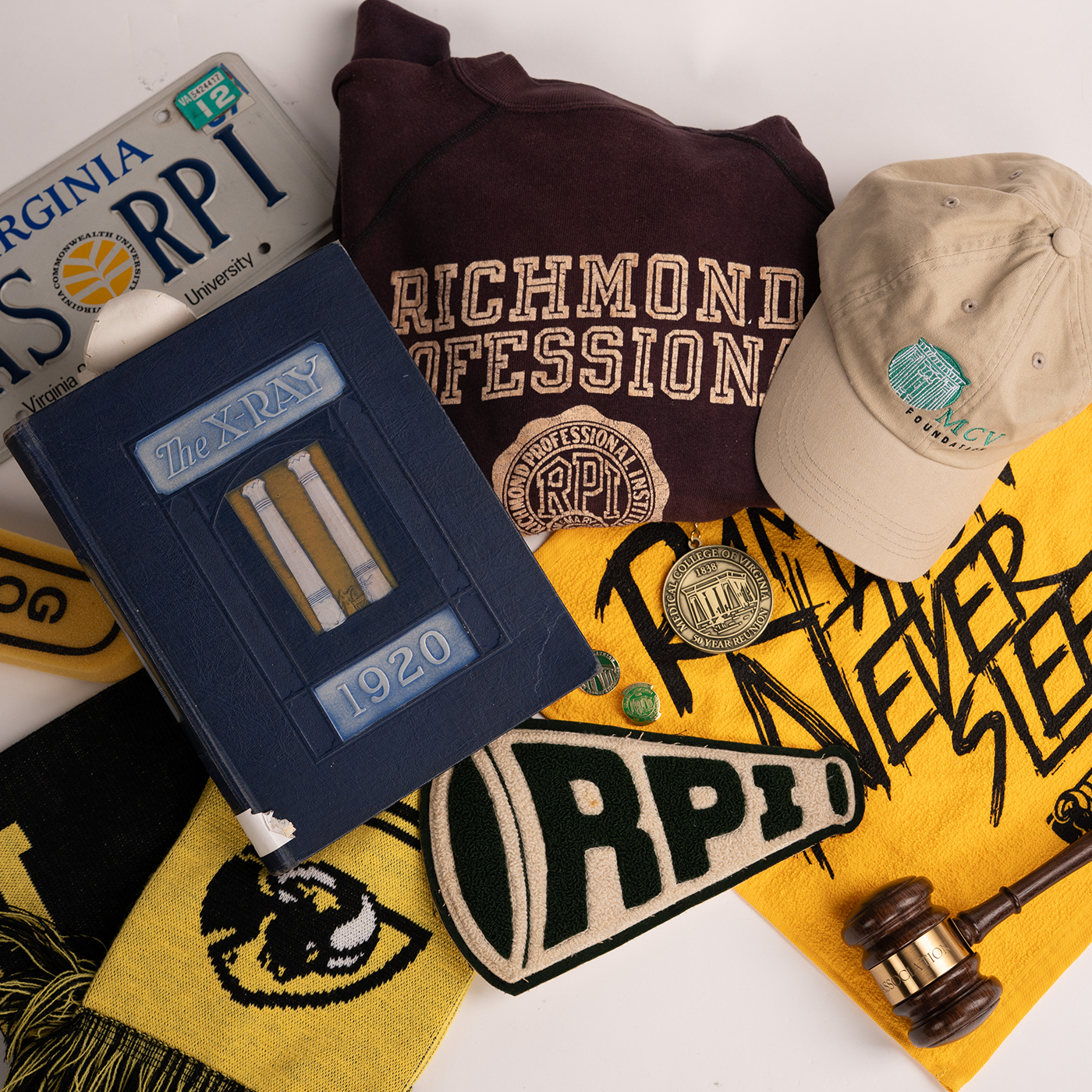
We at Magazine Secret Headquarters (it’s in a volcano; we can’t say which one) have been asking you to tell us about your VCU keepsakes. In this issue, we’re zooming in on what makes VCU VCU — and that makes it a great time to share what makes VCU to you. Here are the stories behind eight things that make us nostalgic. — Matthew Stoss
 WRESTLING PATCH
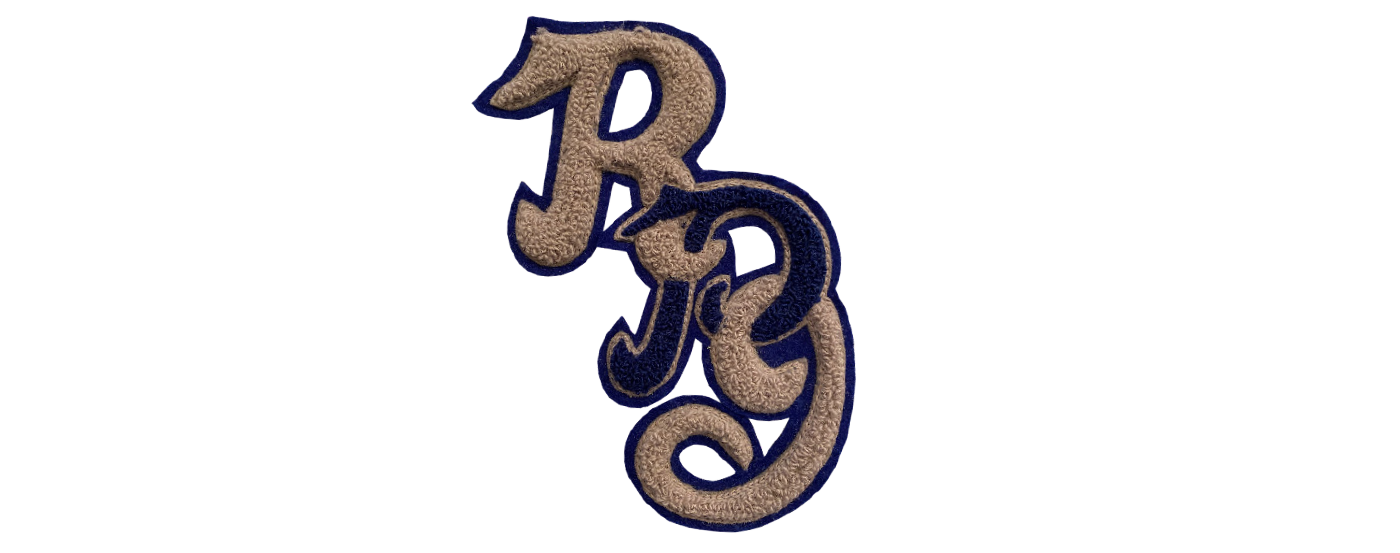
It reminds me of one great time when I was asked to wrestle in the 170-pound class because they did not have anyone at that weight. It was challenging to lose weight to move down from 175. I was a senior and had never been on a wrestling team, but I did finally win one match and enjoyed competing and meeting with the other college teams in several adjoining states. — Maurice J. Robinson Sr. (B.S.’65), Midlothian, Virginia
 PHOTOGRAPH
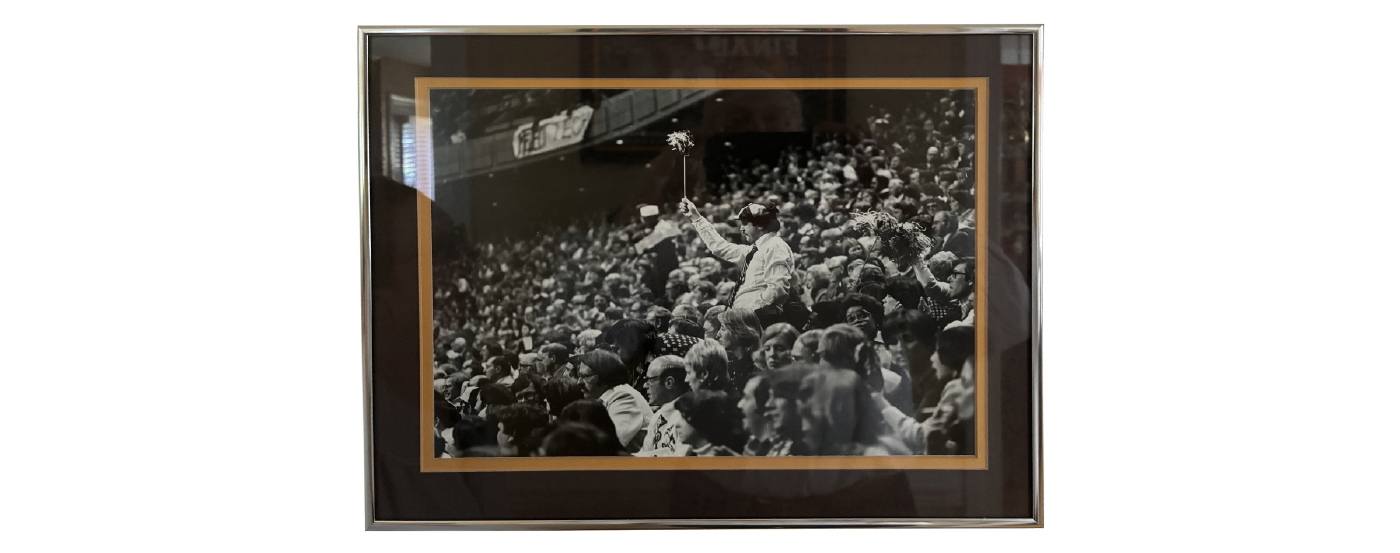
This photo is from the first Richmond Times-Dispatch holiday men’s basketball tournament and the first time Virginia Tech played us. It was 1978 and we were getting beat badly, and it was late in the game, and I just stood up to support my VCU Rams. A RT-D photographer saw me and took this picture as I was the only fan standing up. They published this in the old VCU magazine on the back cover in the late ’70s. He sent me the photo as a favor so I could hang it on my VCU wall at home. — John Jay Schwartz (B.S.’69), Henrico, Virginia
 QUILT
QUILT
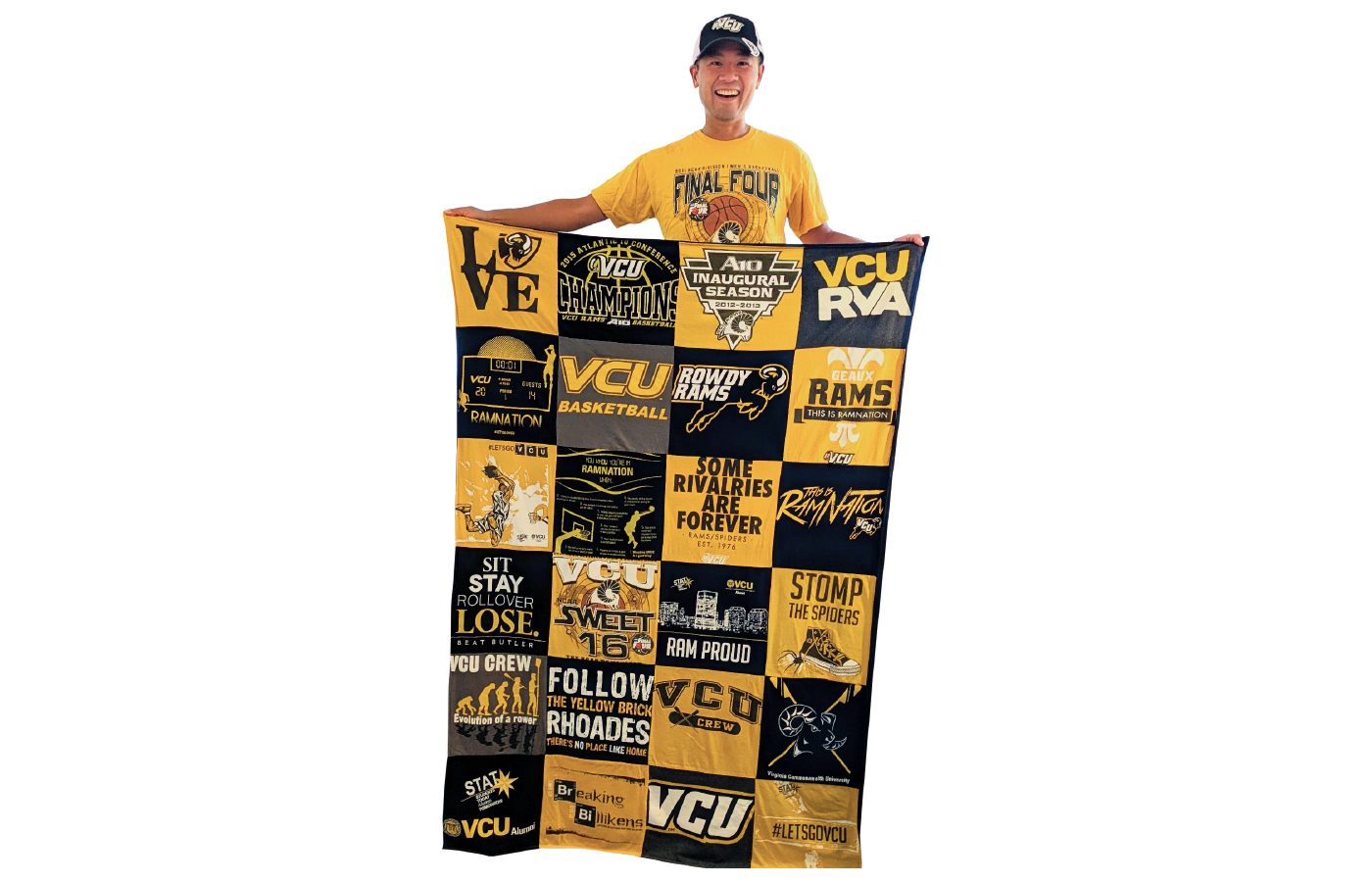
My wardrobe was virtually all black and gold as an undergrad; however, when I realized that my beloved T-shirts hadn’t seen daylight in years, I had this blanket made — to recall some of the best years of my life as a Ram and to cozy up on chilly nights, now in Boston.
This collection is a mix of tees purchased around campus, giveaways snagged at basketball games, and my own undergraduate designs as director of marketing and communications for Students Today, Alumni Tomorrow.
As a community college transfer student who graduated with a bachelor’s four years after my high school peers, I found community as a VCU crew team coxswain, a student admissions ambassador, a Rowdy Ram and in Phi Kappa Sigma fraternity. This blanket preserves those memories and friendships.
(P.S. Since I waited in line at the VCU bookstore for four hours to grab my 2011 Final Four shirt, I couldn’t bear to deconstruct that one. I still bleed black and gold when I wear it proudly out and about.) — Khiem Tran (B.S.’14), Boston
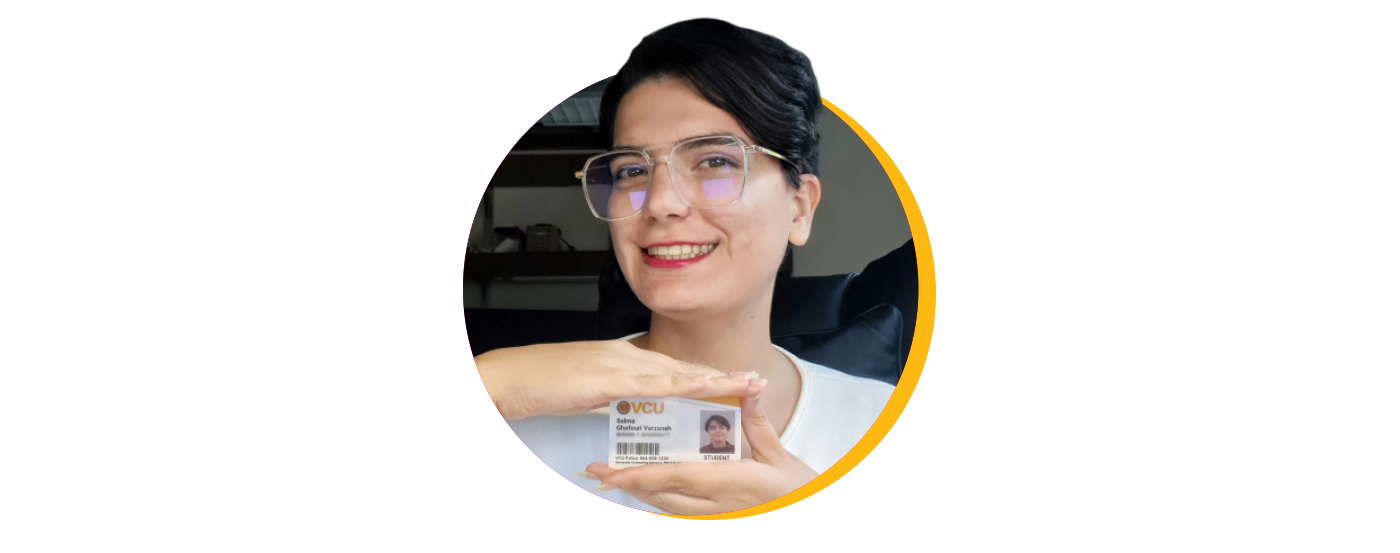 STUDENT ID CARD
As a new international student who didn’t even know how to find Campus Card Services in Richmond, walking out with that card made me feel like I finally belonged.
More than just access to buildings, that card represents access to a dream. My advisor believed in me and waited patiently for months while I worked to get my visa. That card became my key to the lab I had dreamed of working in.
I always keep it in the safest pocket of my bag. If one day I forget my house keys, I know I can still use that card to return to the lab, a place where I feel safe, inspired, and motivated. — Salma Ghafouri Varzaneh, Ph.D., graduate research assistant, OpenCyberCity Lab, College of Engineering, Richmond
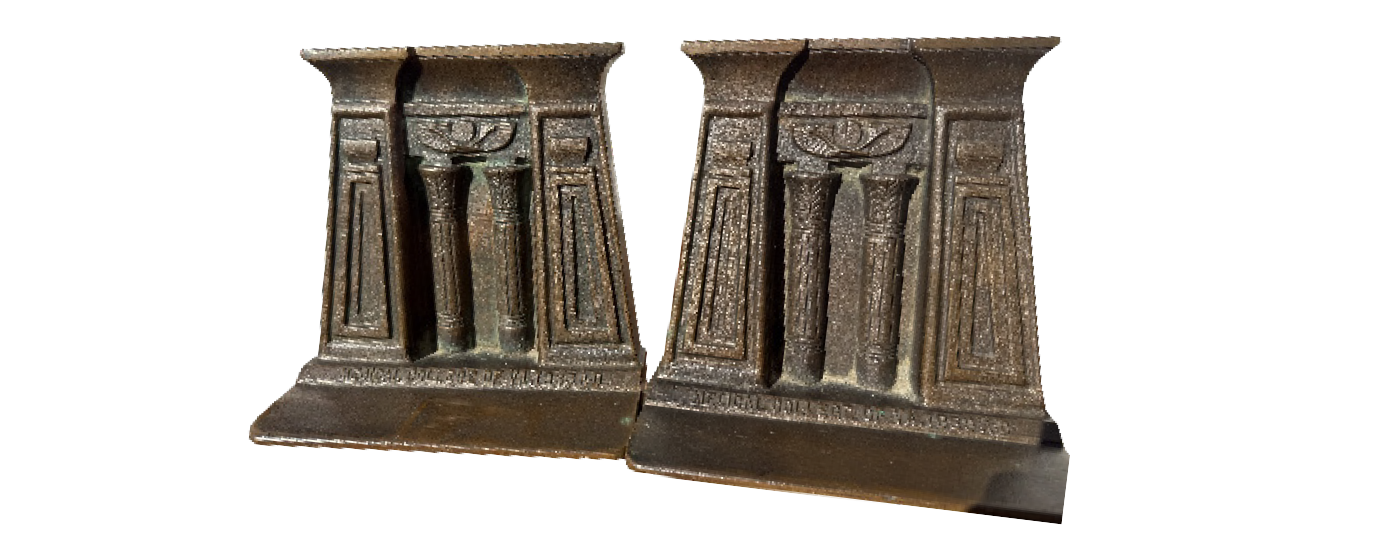 BOOKENDS
My cousin found these bronze bookends of the Egyptian Building in an antique shop in Richmond, and they were my graduation gift from him. I have cherished them. I worked at MCV following graduation until 1984. So many good memories, good friends, and I cried like a baby when I left. The cousin who found these had an antique shop on Broad Street (Berry’s Antiques) for years with his father. — Jane Goodman Kellam (B.S.’77), Mappsville, Virginia
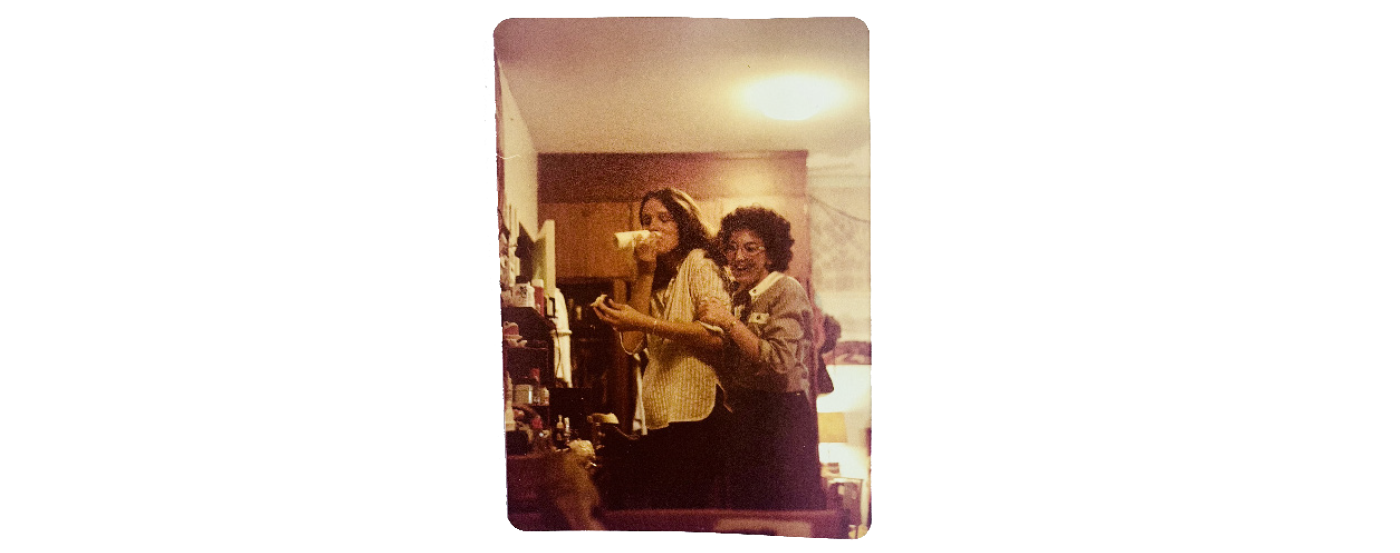 FRIEND
In August of 1978, the elevator brought me, my parents, my footlocker and my great expectations to the 16th floor of Rhoads Hall. Our welcome wagon dorm greeter was my assigned roommate, Gail, stretched out on her twin bed, smoking a Marlboro Light. My dad, a committed smoker, bonded with her immediately. I soon followed.
Growing up in small-town Virginia, I’d never met anyone like Gail. She came from Pittsburgh, with an attitude, a vocabulary, and an eye roll that amazed and thrilled me. She taught me about gum bands, pop and kielbasa. Schooled me about music. Called me “youse” and “jagoff” and wised me up in ways that the faculty doesn’t list in the student handbook. — Joni Ulman Lewis (B.F.A.’82), Fredericksburg, Virginia
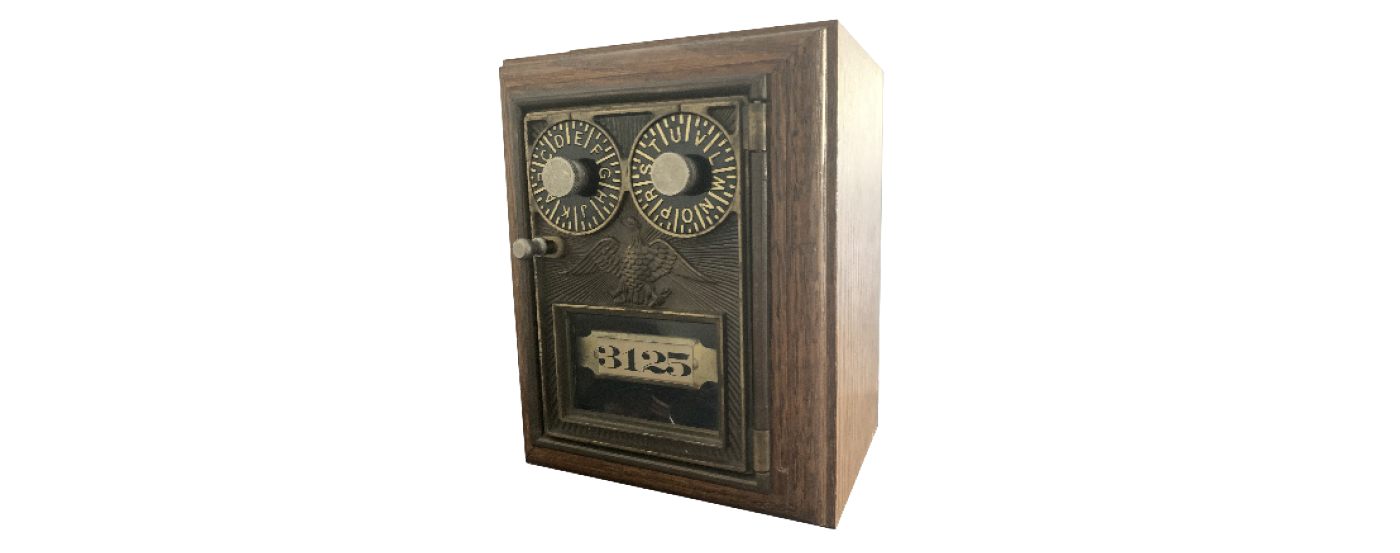 COIN BANK
It’s made from an old post office box that my parents gave me as a kid. Every so often I’ll pull it down from my bookshelf, thumb the combination dials and think about my dad, who spent 36 years working for the U.S. Postal Service in the New York City suburbs.* — James Irwin, managing editor, Richmond
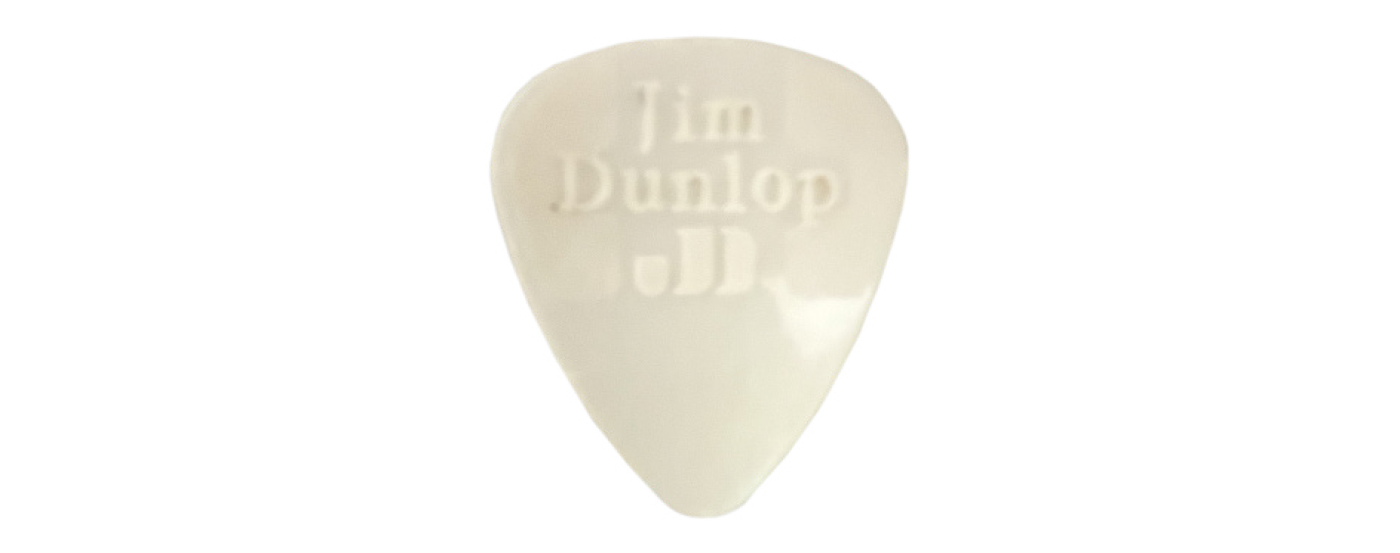 GUITAR PICK
It’s the first pick I bought when I learned to play, and I faithfully kept it for 20 years. Then I got a cat and forgot the pick on the coffee table overnight.* — Matthew Stoss, senior editor, Richmond
*Jim and I only went to VCU in spirit, but we have nostalgia and wanted to play, too.
