Campus & Community
Hey, Michelle and David Baldacci, what’s that $13 million for?
A quick chat about civics and public discourse
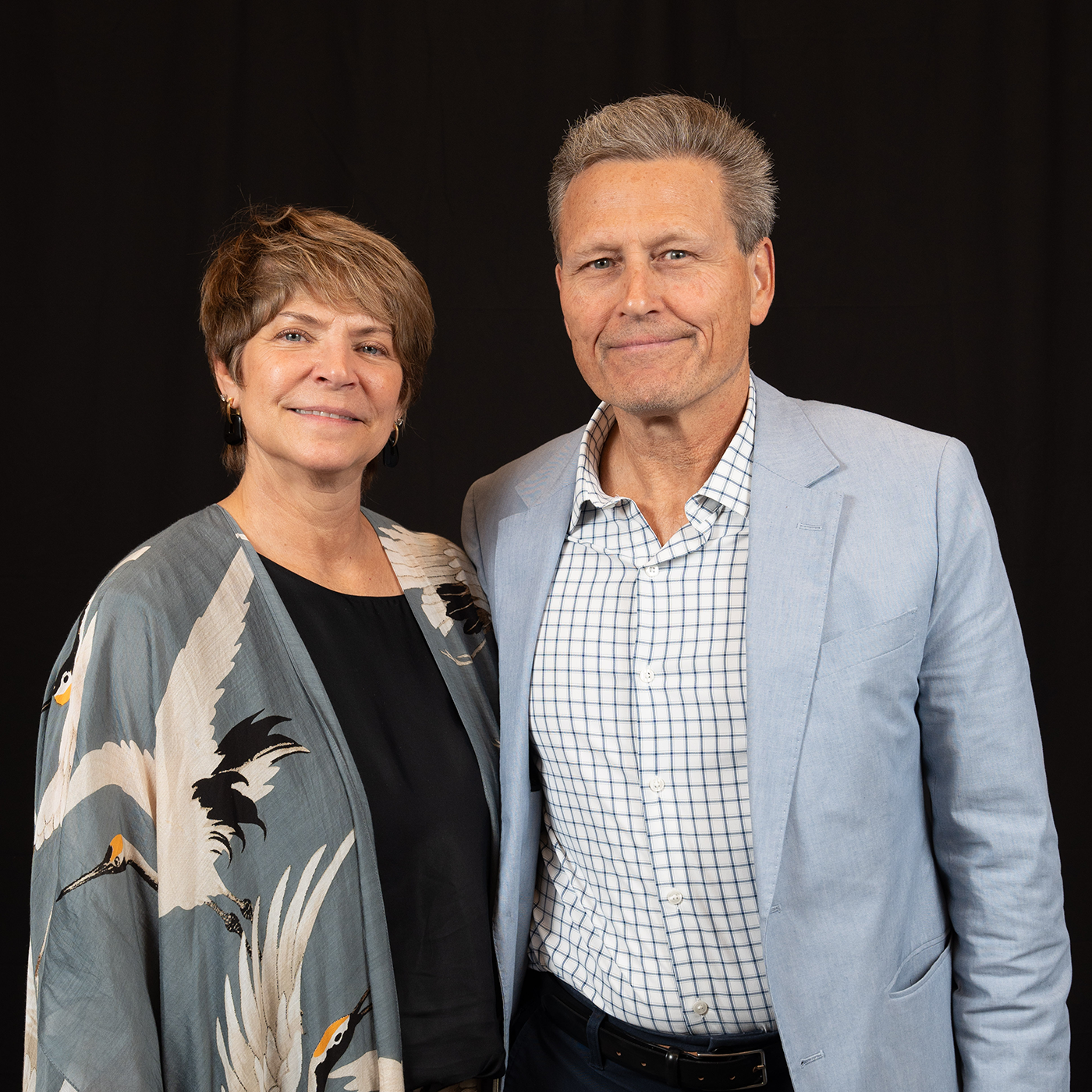
Do you ever just wonder about stuff? Something obvious? Frivolous? Completely esoteric? We do. In One Last Question, we ask an expert from the VCU community to help us learn a little more about anything. In this issue, we ask David (B.A.’83, H.L.D.’01) and Michelle Baldacci about their recent $13 million donation to VCU and the Library of Virginia.
Dismayed by what they see as the shabby state of American civic engagement, David (B.A.’83, H.L.D.’01) and Michelle Baldacci are starting an institute to nudge people toward the public good and, Providence willing, lethally undermine social media.
“There is a sense of urgency because the rest of the world is not really waiting for us to get our house in order,” says David, a recovering attorney and the best-selling author of a shelf-load of books, mostly political thrillers — but also a YA fantasy series. “They’re moving on with their lives as well. … There’s no guarantee we’ll have a democracy tomorrow, but it only depends on the strength and earnestness and dedication of the citizens. That’s what a democracy is. If they don’t shoulder the load, then we’re not going to have a democracy.”
The Baldaccis — one of three couples serving as chairs of VCU’s Unlocking Potential campaign — donated $13 million to VCU and the Library of Virginia to start the “Civil Discourse and Collaboration Initiative,” the working name for an institute of civics, education and public discourse, housed jointly at the two institutions. The idea’s been gestating for a few years and was announced in September.
“If we don’t provide a means for people to talk to each other, we’re dead in the water,” David says. “Social media and the algorithms — they’re too strong. They’re just too overwhelming, and the only way we can beat back against that is to bring the personal [connection] back into it.”
Planned for a rolling opening this year, it will be a living, breathing institute, a protean thing that, notably, features statewide lectures, public forums, and a curriculum in VCU’s College of Humanities and Sciences.
“One thing everyone agreed on was we needed to have venues and platforms and means to bring people together,” David says. “One of the things we talked about was having a town hall with no politicians. Just having citizens — voters — discussing issues without the presence of any elected official. People used to do things like this.”
As an example of what all this might look like, David extemporized about two moderated expert panels, one in northern Virginia and another in the state’s southwest. For possible topics, David offered a buffet: health care, inflation, affordable housing, immigration. Audience discussion would follow the panel, and later the two groups would transcend geography to mingle for symposium, either in person or through the internet.
It’ll also be fun.
“Make it ‘Schoolhouse Rock’ for adults,” Michelle says. “Wouldn’t it be fabulous if everybody had the opportunity to see ‘Hamilton’ and just start there? And then have questions based on that.
“... It’s not always just about the presidential election. It’s about your local representation, your state representation. These really, really matter — almost more in many cases. It’s just engaging people again. Maybe they were more engaged back in the World War I, World War II time frame, but I think it’s just making people understand, as David said, maybe get off of social media a little bit and pay attention. It doesn’t have to be every day, but it has to be something that you look for the answers, for the truth, for the facts. It’s making people understand if they pay attention, they can make a difference.”
College of Humanities and Sciences Dean Catherine Ingrassia, Ph.D., and Librarian of Virginia Dennis Clark will unofficially oversee the undertaking. A full-time director, the Baldaccis say, is a future possibility, depending on how all this develops. They hope the initiative becomes a model to be mimicked and personalized by other states.
“If you actually can get a personal connection with someone you may not agree with on a lot,” David says, “and you sit across from them and you talk through things and you see it as both of you want good things for the country, maybe that’s more powerful than a million algorithms. I don’t know. I’m hoping that’s the case.”
