Campus & Community
For the home teams
A quick tour of Richmond’s new baseball park and the first phase of VCU’s Athletic Village
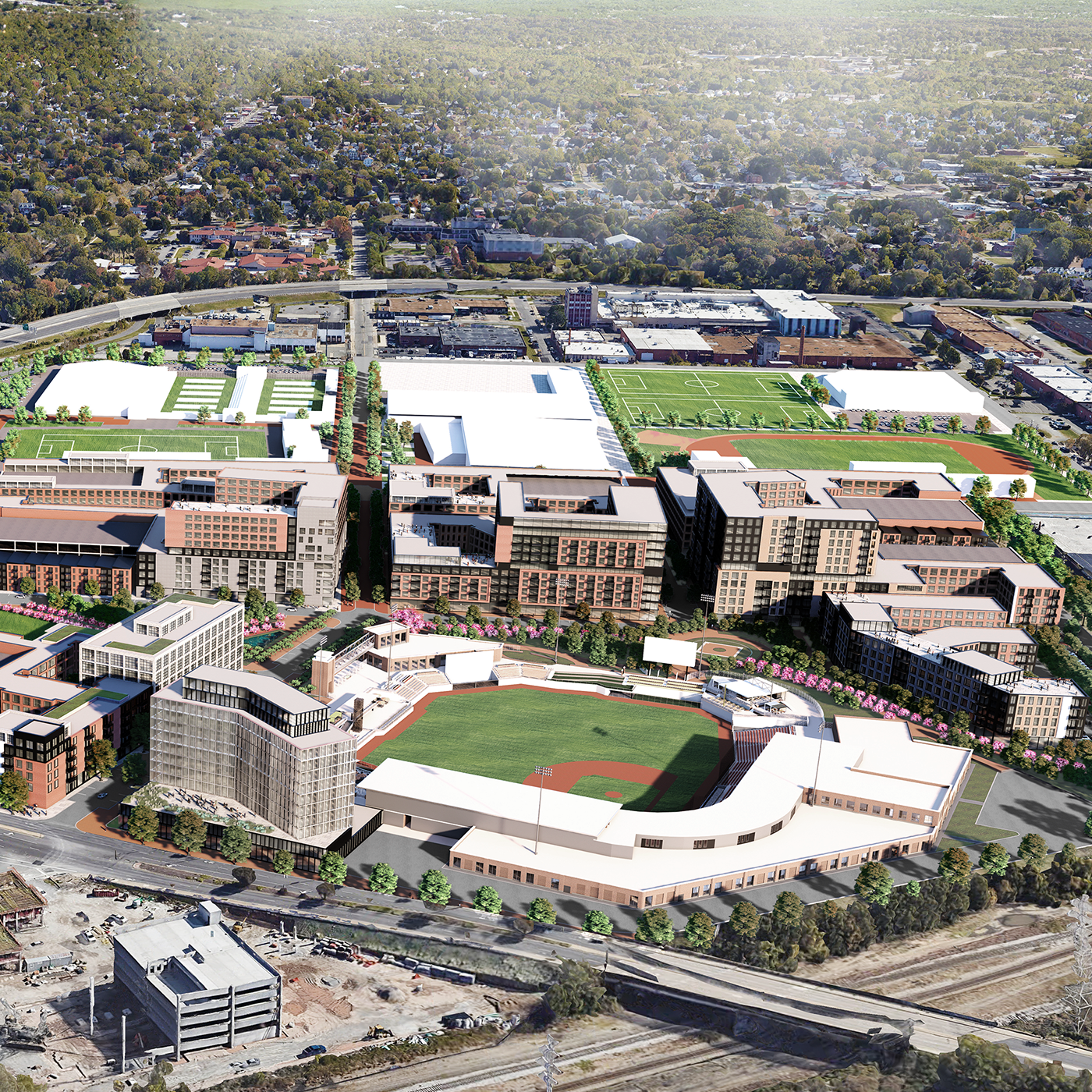
Richmond will welcome two sports venues in 2026: the $117 million CarMax Park, home to the minor league Richmond Flying Squirrels and VCU baseball, and centerpiece of the city’s 67-acre Diamond District off Arthur Ashe Boulevard; and an outdoor track and field complex about 500 yards to the east that will anchor the $38 million first phase of VCU’s Athletic Village.
The megaprojects will be stitched together by a future urban village on the eastern side of the Diamond District along Hermitage Road. (The 42-acre Athletic Village will eventually include a field house with an indoor track, a soccer stadium and a tennis center.) It’s all part of one of the largest redevelopments in the city’s nearly 300-year history, says VCU Athletic Director Ed McLaughlin.
The new stadiums are rising on land once occupied by undeveloped dirt and a former Greyhound maintenance building. Their neighboring predecessors are SportsBackers Stadium (1999-2025), the former home of VCU’s soccer and track teams, and The Diamond, that beloved hunk of Boulevard-fronting concrete that served as the city’s pro baseball park for the past 40 years (VCU will play a final season at The Diamond in 2026 and move into CarMax Park in 2027).
Built in 1985 and stylistically obsolete soon after, The Diamond nonetheless entertained two generations of fans — and survived at least two campaigns for a new ballpark — before being replaced. The new arrivals should help ease the loss. “It’s the difference between driving a 1985 AMC Eagle with roll-up windows and a dial radio and then getting in a 2026 Porsche,” McLaughlin says. Here’s how:
Slideshow
Slideshow
The Diamond’s steep, boomerang-shaped grandstand meant almost all of its 12,000 seats offered a commanding view. But more than half those seats were in the upper deck and reaching them required sturdy quads and a mountain goat. The stadium’s superstructure only extended about two-thirds of the way to the foul poles. Its concourse was buried behind luxury boxes that separated the lower and upper sections. “If you needed to use a restroom or go to concessions, you were going back behind the suites and you couldn’t see the field,” says Tim Lampe, Ed.D. (Ed.D.’14), VCU’s senior associate athletic director for facilities.
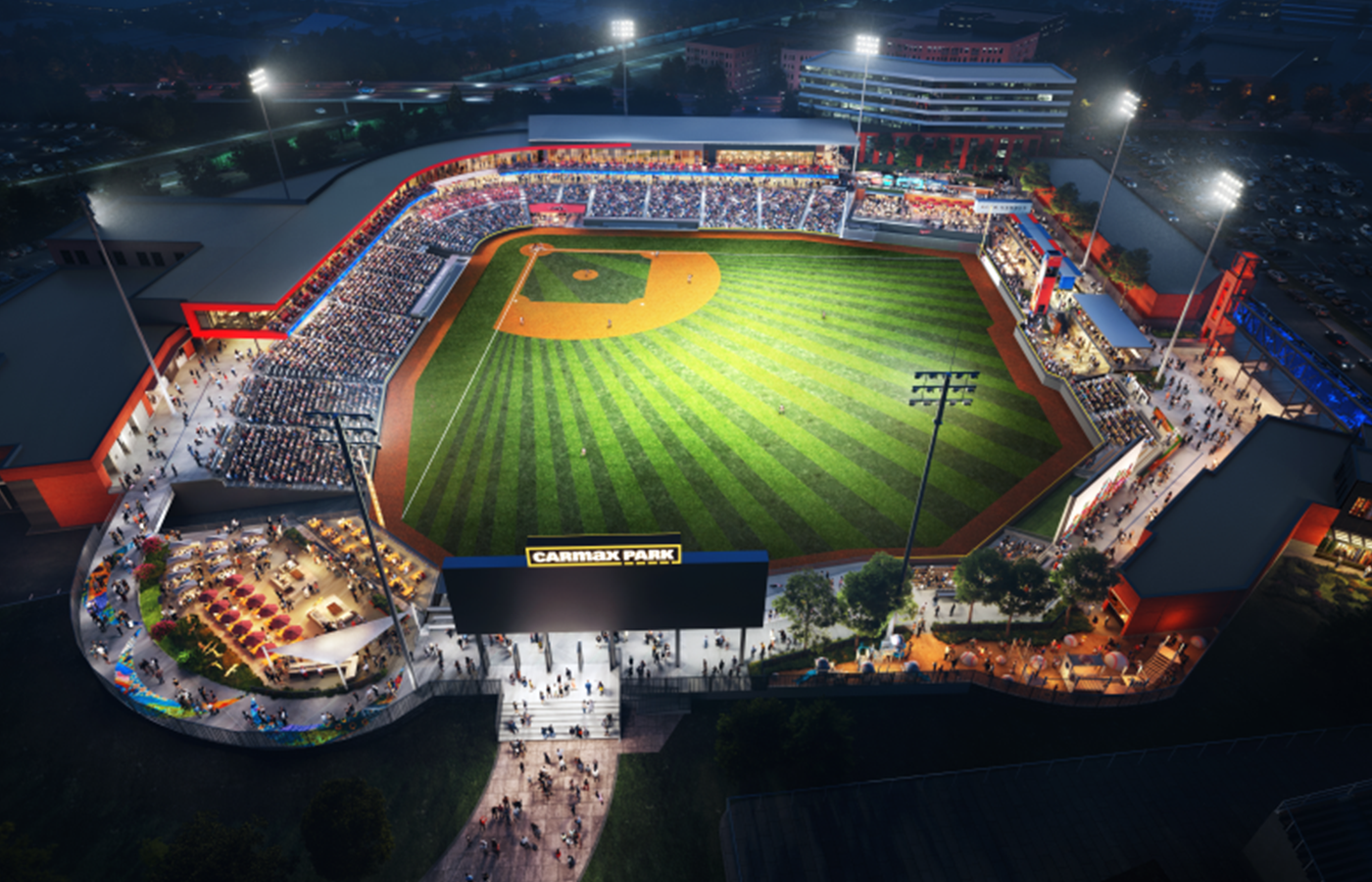
CarMax Park flips this. Of its 8,000 seats, 5,500 will be field-level. The concourse will wrap around the ballpark, branching off at gathering zones that can accommodate another 2,000 people. “And everything is field-facing, so you never leave,” Lampe says. “You’re going to have a kids zone, a picnic area, you’ll even have a berm to throw a blanket down and watch the game.”
CarMax Park will have three clubhouses: one for the Flying Squirrels, one for VCU baseball and one for visiting teams. (The Diamond had two.) It’s a back-of-the-house detail no fan will see, but it might be the ballpark’s most important upgrade, McLaughlin says, because for decades the Rams shared The Diamond’s second clubhouse with the Flying Squirrels’ visiting opponents.
“They’d have potentially a visiting team coming in [on a] Tuesday, so we’d move out. It was just a very transient way of life,” McLaughlin says. “A lot of times our teams would dress in the locker rooms by the Siegel Center and then drive over in their gear. Like, you’re lining up against a [pitcher] who’s throwing gas, and you just got out of your car and jumped in to take batting practice. Now, with CarMax Park, we’ll truly have our own home.”
SportsBackers Stadium was a workhorse. On any given day, a few hundred people would be on its running track and Bermuda grass turf. Built to accommodate soccer and track, it wasn’t truly designed for either, Lampe says. “[It was] really just a track with a field in the middle. And it was a very hardy turf — it could withstand the practices and the games — but it was hard for us to give [our teams] the best field because we were beating it to death year-round.”
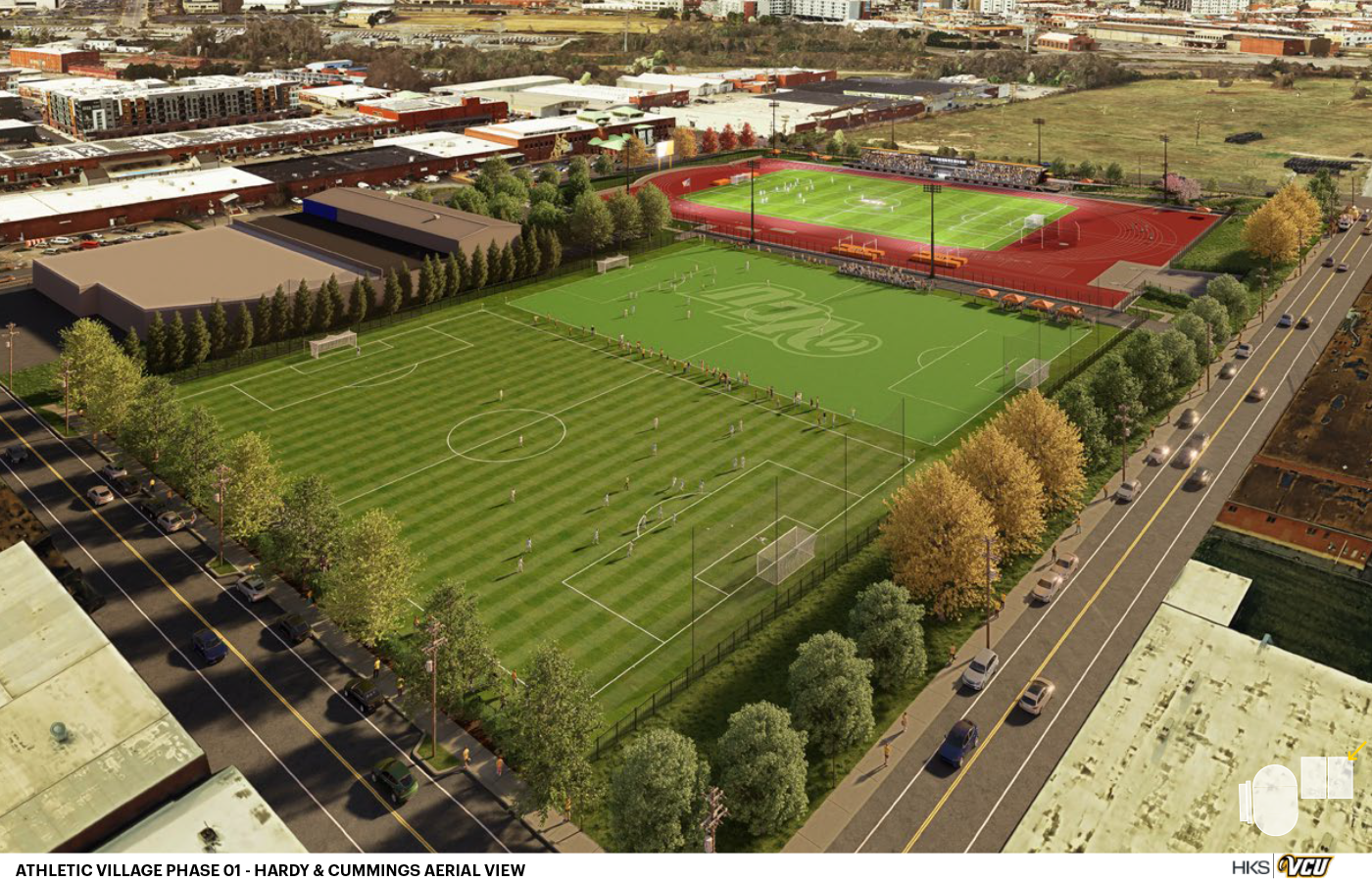
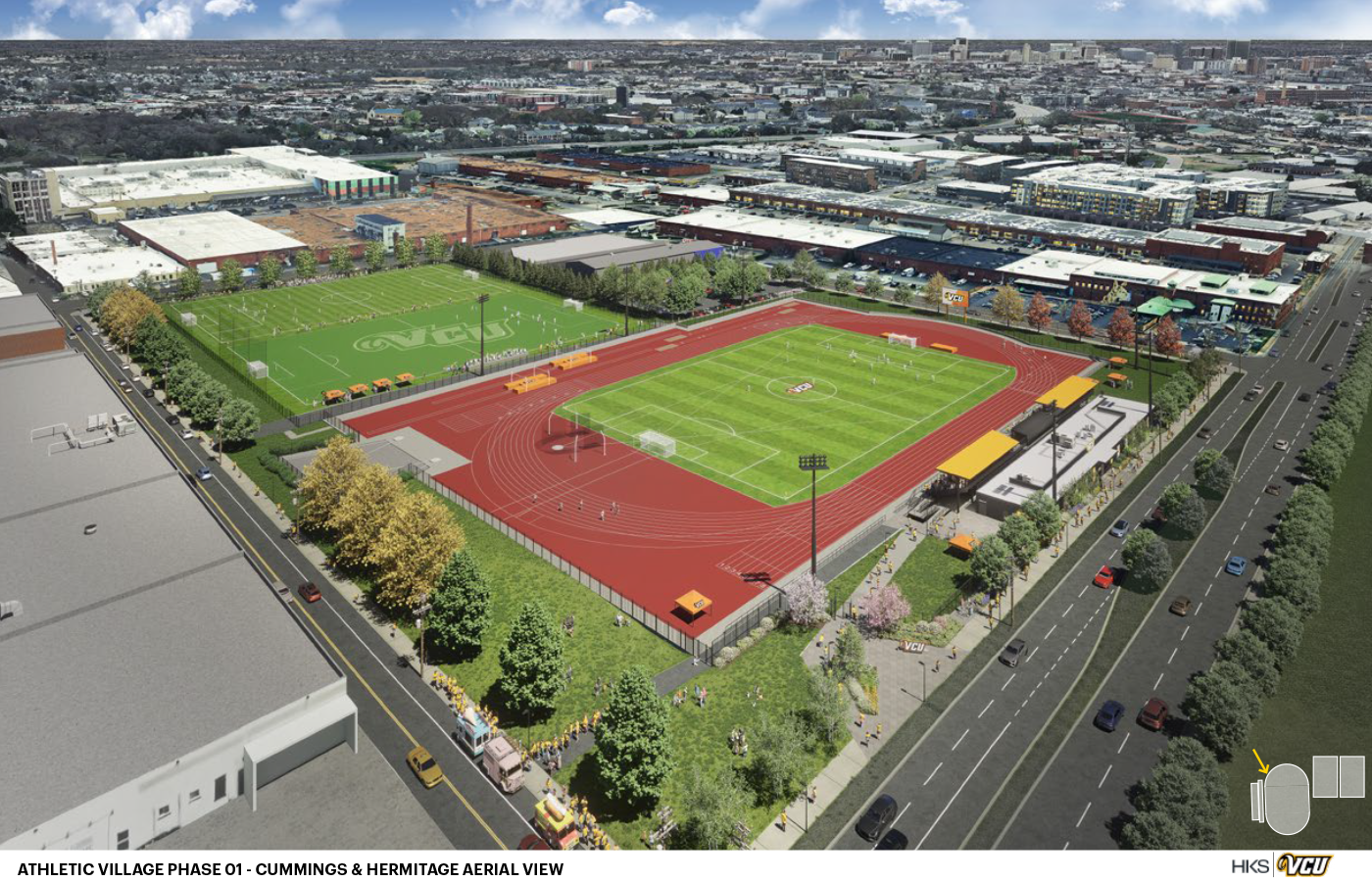
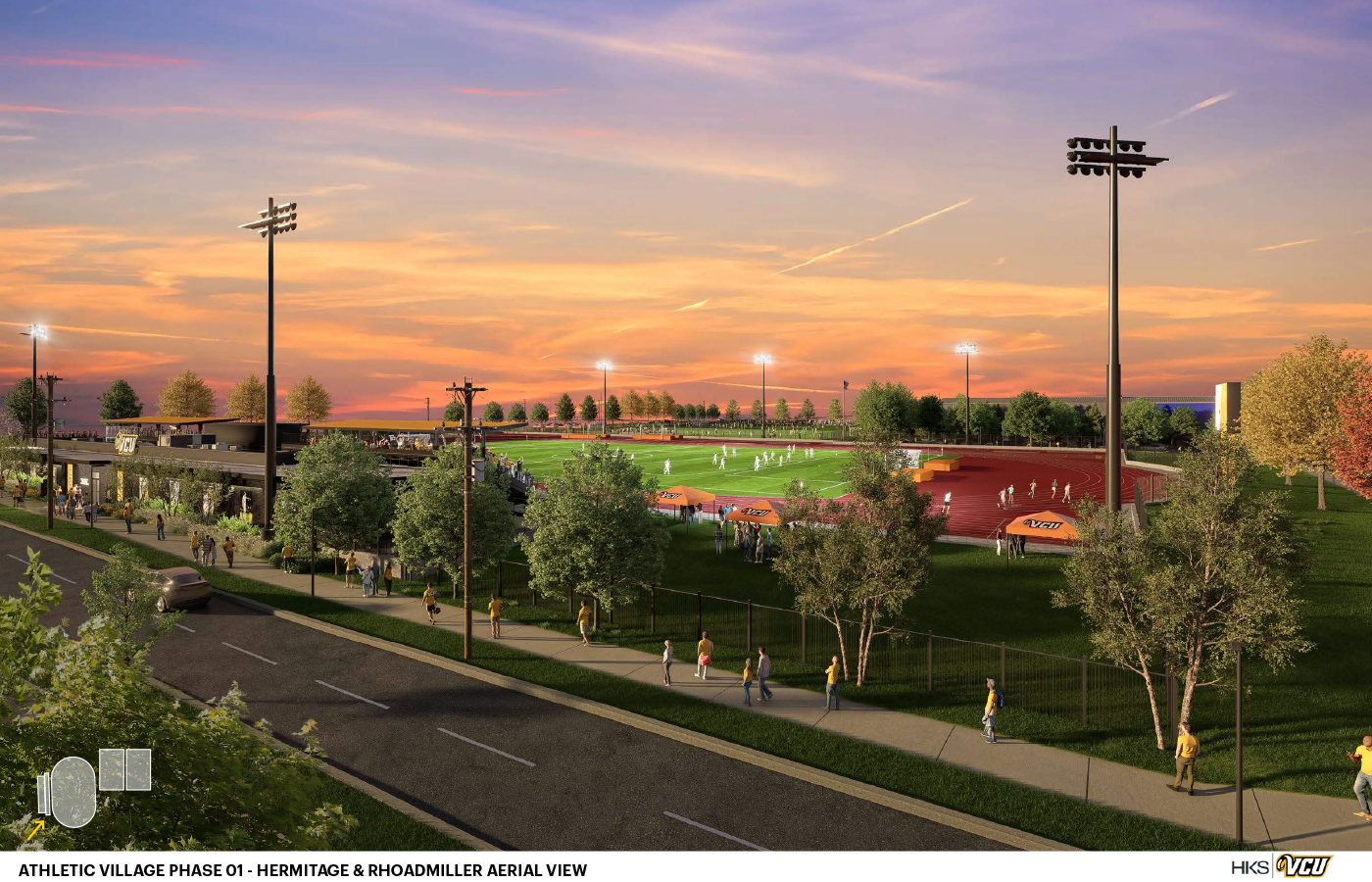
Phase 1 of the Athletic Village will add two soccer practice fields — one natural grass, one artificial turf — next to the forthcoming track stadium, which will double as a medium-term home for VCU soccer. Once the new soccer stadium is built in the Athletic Village’s third phase (year TBD), the four teams that shared SportsBackers Stadium for everything will have sport-specific game day and training facilities, making for easier scheduling and field maintenance — and fewer soccer balls rolling through the long-jump runway.
Spend five minutes at a big track meet — dozens of schools, hundreds of athletes, 40-plus events and a small city of branded tents and charter buses — and you quickly realize it’s an exercise in organized chaos. “Try to follow everything going on,” McLaughlin says. “It’s impossible.” The Athletic Village gives that chaos some directional flow.
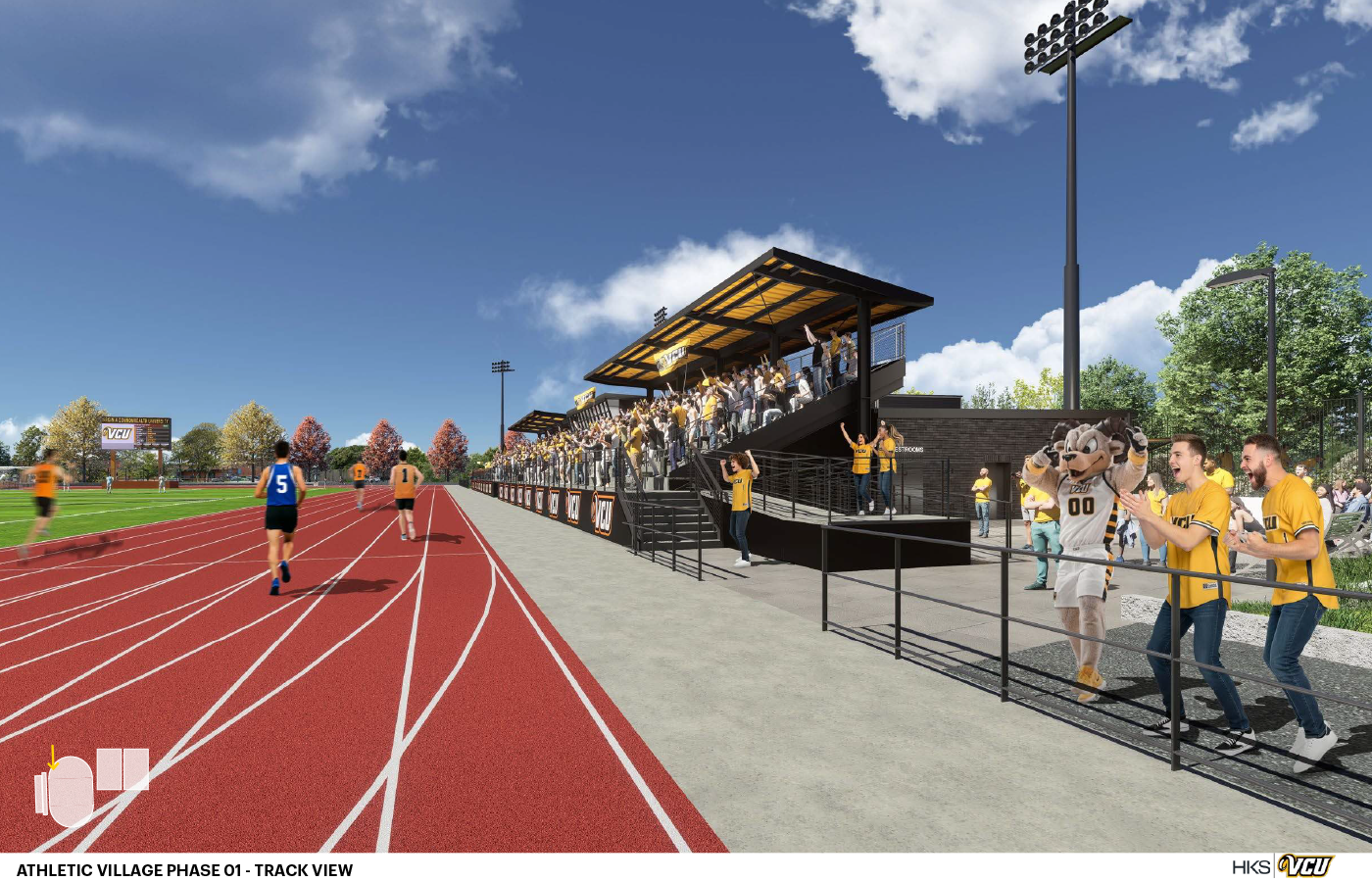
The stadium’s 1,000-seat grandstand, complete with a broadcast-ready press box, will be west of the track. Event check-in stations will be east of the track, next to the artificial-turf soccer field. “Putting that field next to the track [means] teams come in with their tents, they have a place to get some shade and relax and do some additional training,” Lampe says. “And then, as soon as they check in, they go right out on the track. It’s so important because of timing. You’ve got pole vault, your jumping events, javelin. And you don’t have time to wait. You need it all to go simultaneously.”
