Research & Discovery
‘Because of research’
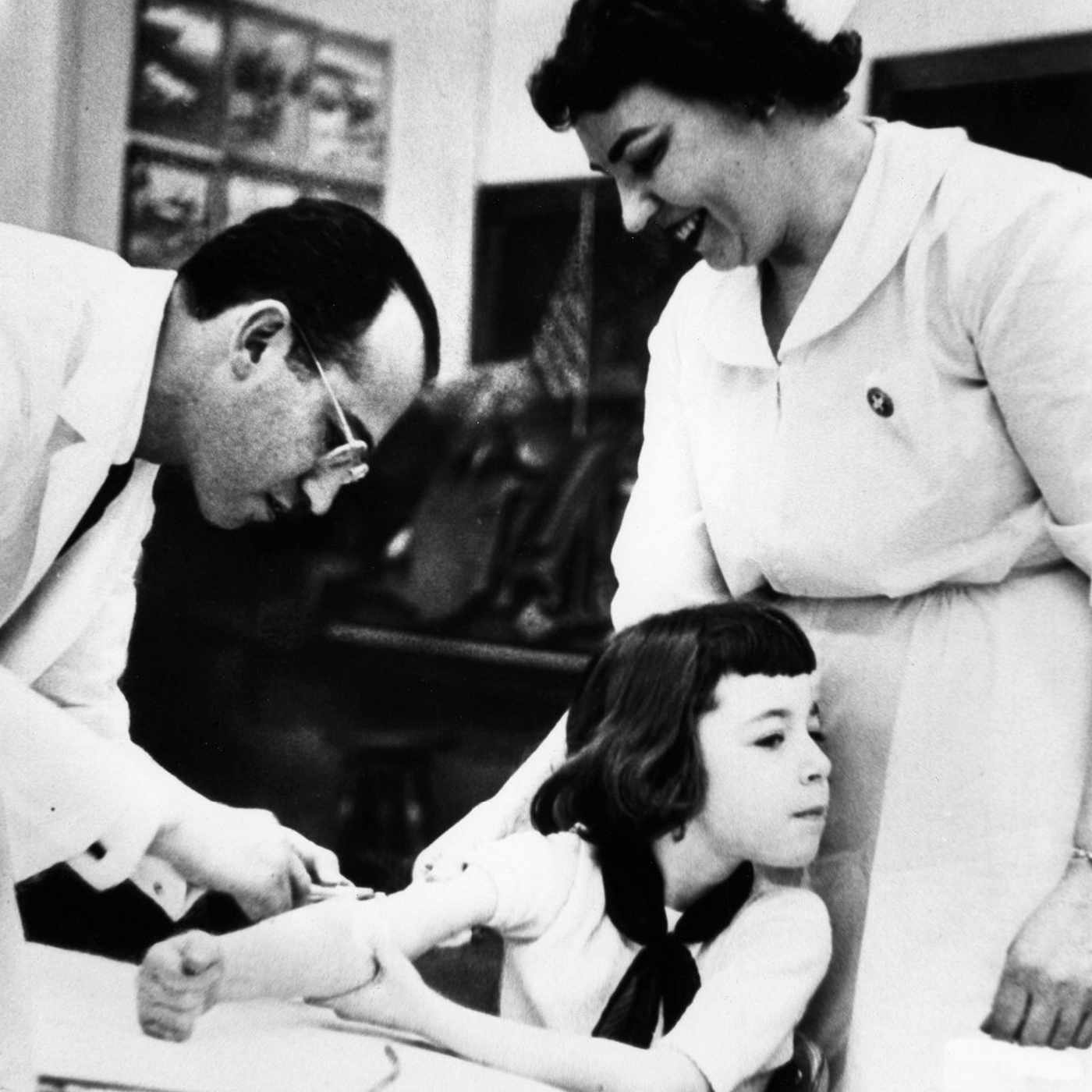
Bill Dewey, Ph.D., knows about grants. The opioid scientist’s had lots of them, including one to train future scientists, maybe even the next Jonas Salk.
Bill Dewey, Ph.D., is a 90-year-old raconteur from Albany, New York, the chair of VCU’s pharmacology and toxicology department, and the sort of man who makes you miss your grandfather. Like any science teacher worth their bow tie — or in Dewey’s case, their cardigan — he has a knack for relating stuff in everyday ways.
“Hey, you and I like sports,” Dewey says from a coffee shop patio on a misty summer afternoon in Willow Lawn. He is a front-running St. Louis Cardinals fan. “I started in this business at a pharmaceutical firm in upstate New York. And a bunch of us, we worked from 8 to 5 — this is important — 12 to 1 was lunchtime. Well, we were young guys. We’d cheat and eat our sandwich in the morning between experiments, and at noontime we got to play football on the lawn, or some other sport. One guy didn’t go out. He had crutches. He liked sports as much as you and I do, and we’d all be talking sports all the time. We’d come out and play; Eddie Sills couldn’t go. Eddie had polio. You know anybody who’s had polio?”
No.
“You know why?”
Jonas Salk and Albert Sabin?
“Because of research,” Dewey says. “You’re right. Salk and Sabin. You’re absolutely right.”
They developed the first polio vaccines, Salk’s injected and Sabin’s oral. The Food and Drug Administration approved Salk’s vaccine in 1955 and Sabin’s in 1961.
“It was those two, definitely, but it was also everybody else who worked on the research and did a little something to [solve] that big puzzle,” Dewey says. “It wasn’t just those guys — they deserve all the credit. Don’t misunderstand what I’m saying. They deserve it. But every technician in those labs, everybody that did some of that stuff and contributed to knowledge of that disease, helped cure that disease — that’s what it’s about. That’s why we do it.”
Dewey’s an evangelist, probably more than most things. His cause is knowledge. He came of age in the early days of America’s superpowerdom, following World War II and four Cardinals pennants. Those were also the early days of America’s golden age of federally funded research.
The National Institutes of Health has existed in various configurations since the late 19th century. In 1948, they all consolidated to become the NIH we know and possibly take for granted, but definitely rely on, today. It spends most of its almost $50 billion yearly budget on research grants. That’s public money going to solve public problems, like a disease that’s paralyzed children since antiquity.
The National Science Foundation followed the NIH in 1950, NASA in 1958.
Intelligence, as much as anything, made and sustained America’s mid-century boom. Salk and Sabin both had federal funding.
“There’s only one reason to do biomedical research. That’s to make people feel better, to be healthy,” Dewey says. “It’s not for pats on the back. It’s not for saying how great you are. That’s bull----. You know, it’s like an athlete. You don’t go around touting yourself. Come on. Who needs that? You do it to improve the health of people.
“I had a daughter who was mentally disabled. She passed away at 52. If a scientist, you or I, or anybody else would do something to cure a person’s chronic illness, you can’t find a better meaning to be alive.”
Dewey frequently speaks through the softer parts of his heart.
“[Research] is an important part of education,” he says. “It’s an important part of educating people on how to do things because those students will be doing that the rest of their life. And that’s the fun of it. And let’s face, it’s a hell of a lot of fun — you like sports. You won. That’s more fun than losing.
“You and I didn’t talk about the teams that lost. We talked about the teams that won. We talked about teams in there” — he means at the counter where we shook hands, ordered coffee and debated the divinity of Babe Ruth — “we talked about winners. You know why I like the Cardinals? They won the championship in the ’40s. And, like you said, some people still like the Cubs.”
“There’s only one reason to do biomedical research. That’s to make people feel better, to be healthy. It’s not for pats on the back. It’s not for saying how great you are.”
Dewey started at VCU in 1972 as an opioid-use researcher after playing right field at Siena College; two unremarkable conscripted years overseas in the Army; a master’s degree at the now defunct nun-run College of Saint Rose in Albany; a doctorate at the University of Connecticut; and a postdoc at the University of North Carolina, where he once offered his basketball expertise to Dean Smith. Dewey regrets the error.
Between undergrad and his exile with Uncle Sam in Germany, Dewey coached some American Legion baseball and learned to prefer stat-keeping to outfielding because he “didn’t get sweaty every day.” He also got a feel for teaching in what has all the symptoms of a formative experience.
As a researcher, Dewey studies how opiates interact molecularly with our bodies. He does this to contribute enough knowledge so that, one day, some scientist, in a more aureate future, can devise a better drug than we have now. We’re due. The FDA licensed the most recent opioid addiction drug, buprenorphine, in 2002.
“For a disease like that, we’re just not smart enough,” Dewey says. “As blunt as that. ‘We’ being all science, not VCU — everybody. Sabin and Salk haven’t come through yet.”
Nowadays, Dewey is largely an administrator. For a while, he just moonlighted a lot as one, serving from 1987 to 2000 as VCU’s vice president for research while still running his lab. And, of course, evangelizing.
“I tell the students,” he says, minding what’s left of his coffee in the mists of Willow Lawn, “you write something in the discussion [portion] of your paper. The paper is: You talk about what the project was, you talk about what you did and then you talk about what you got, then you discuss its importance. Well, you put a sentence in there that two weeks later somebody else reads, or two months later, or two years later, and it gives them an idea. That’s a contribution — that’s when you find out what other people are thinking. And it’s such a team effort.
“I guess those of us who like sports, like you and I do, this is sports. This is a team effort, and the team is all the scientists around the world working on what you’re working on. But it’s also like the Cardinals and the Yankees are competing with each other. … In that case, both want to win and only one can. In this case, both want to win and both can — and do.”
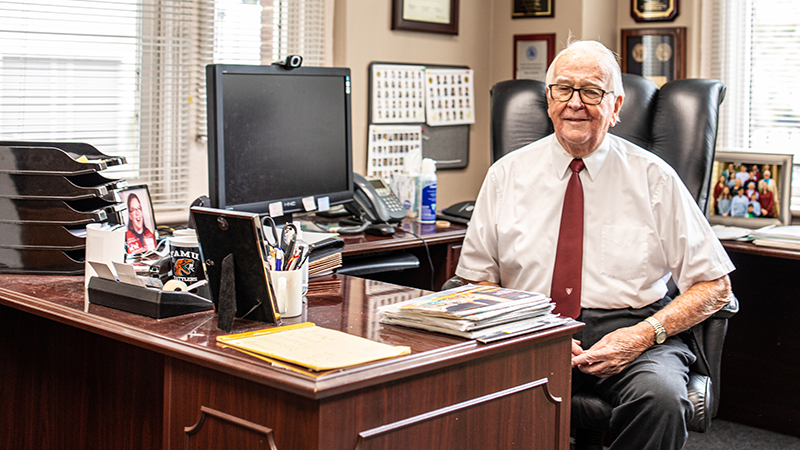
Bill Dewey, Ph.D., has taught at VCU since 1972. He’s chaired the School of Medicine’s Department of Pharmacology and Toxicology since 2008. (Deaudrea Aguado)
In 2024, the NIH’s National Institute on Drug Abuse gave Dewey its Lifetime Achievement Award, recognizing his more than 50 years of research, nearly 400 scholarly articles and founding the Friends of NIDA. It’s a two-decade-old consortium of scientists, community organizations, patients and professional societies that lobbies Congress in the federally funded name of addiction research.
Dewey can speak with some authority on that. The chair of VCU’s Department of Pharmacology and Toxicology since 2008 and the director of the university’s Central Virginia Center on Drug Abuse, Dewey’s had a NIDA student-training grant since 1976.
His grant, officially an Institutional National Research Service Award, has been renewed every five years, most recently in 2021. Over its half-century of being, the grant’s been worth about $25 million and funded the research of more than 600 predoctoral and postdoctoral students.
It is NIDA’s longest-running, continuously funded training grant, and VCU’s longest continuously funded grant of all time.
“You want to help cure disease, and the challenge is so much fun,” Dewey says. “You have an idea that no one else ever had. You’re in a lab and 99.99.99 don’t work. Then one does. You’re exhilarated, just by the odds that something you do contributes to [science] — and you don’t go around bragging and s---. That’s not the point. That’s not the point. It’s nothing to do with you, nothing to do with the researcher, per se, but s---, you gotta do something for a living.
“At 90 years old, I don’t wanna sit around here and wait to die. Screw that. I’m not ready to do that. If [they] say, ‘Why the hell are you working? You’re crazy’ — and they’re right. I am. But why do I want to sit and wait to die? I don’t want to. I can’t do research like I did 20 years ago; there’s no question about that. That’s not important. I can be another person working in the whole stream of things and do the administrative stuff now so others can do the research. As the department chair, that’s what I do. I’m the administrator of the department and I know the business. That’s my job now.
“If I can work hard and get a faculty member who’s having trouble getting his or her grants right now and figure out a way to get them good solid pay and keep them on the job until things quiet down, that’s like getting a new grant myself. That’s a win. That’s like winning a ballgame. It’s something you strive to do, and if it works it’s like winning a ballgame.
“I kind of put most things in with sports.”
